
Summer Koide, ACC: Coaching for the Complicated Middle
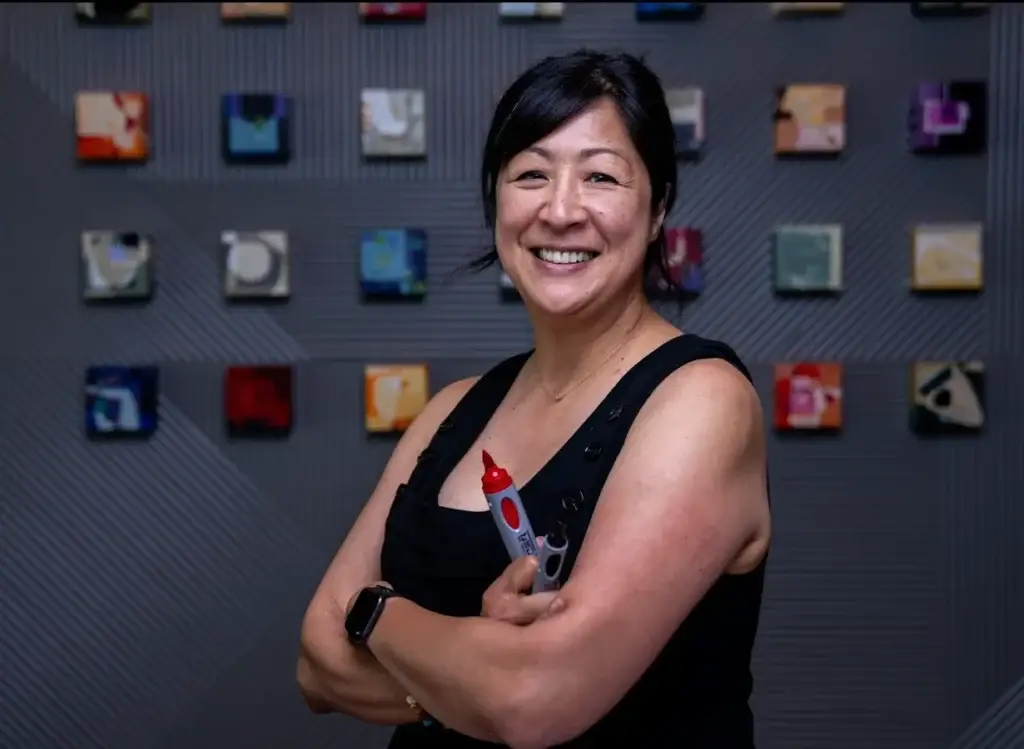
Long before “ACC” followed her name, Summer Koide earned a different kind of title from the engineers she worked alongside early in her career. She had a habit of walking into a room full of competing opinions and turning the noise into something everyone could agree on with nothing but a marker and a whiteboard. The engineers gave the skill a name: “summerizing”, a play on her name for how she used the whiteboard “to clarify, align, and distill complex ideas into actionable steps,” as her team describes it today. That instinct is still the center of her coaching practice. Today Summer is the founder of Creative Change Consulting and an ICF Associate Certified Coach based near Lake Minnetonka in Mound, Minnesota. She works with executives, senior leaders, and leadership teams carrying more than most job descriptions account for. Her profile on Leadership Coach Directory describes clients stepping into bigger roles, leading through change, managing cultural tension, or working in situations where, in her words, “the answer is not obvious.” What She Actually Does Her practice is built for leaders who have already read the leadership books, and who now need something with more grip. Her one-on-one executive coaching supports senior leaders facing growth, change, or a shift in leadership identity. She also offers strategic coaching and consulting, a blended coaching and advisory model for leaders who need help making sense of a genuinely hard problem rather than following a template. For groups that need to align around strategy or culture, she also runs facilitated working sessions and offsites. Most engagements begin with a short, no-pressure discovery call to work out whether coaching, facilitation, or something in between fits the need. One capability that sets her apart from most executive coaches is her training as a visual facilitator and graphic recorder. She’s able to sit inside a live strategy conversation and turn it into a visual record in real time, helping a room see its own thinking as it happens. That skill anchors The 6 Capacities Leadership Development program, a values-based experience built to help leaders understand themselves, their stakeholders, and the forces that shape motivation, resistance, and influence. A Coaching Style Built on Values Ask Summer what makes her approach different and she will tell you she refuses to treat leadership as a checklist. As she puts it on her website, “my work stands out because I do not treat leadership as a set of generic behaviors or simple best practices.” Instead, she works underneath the visible behavior, at the level of values, assumptions, fears, and power dynamics, the quieter forces that actually drive how a leader shows up under pressure. Her style is adaptive, creative, and strengths-based, delivered through conversation that can turn Socratic or deliberately provocative when a client needs to be pushed. “Leadership today is complex,” she writes on her firm’s homepage. “Teams are diverse, challenges are layered, and simple answers are rare.” Her clients are not looking for comfort. They want someone who will sit with them in that complexity instead of flattening it into a slide. “The world isn’t slowing down,” she writes. “If you want to lead, you need the capacity to meet the moment, with integrity, imagination, and impact.” It is a fitting mission statement for a coach whose specialty is capacity itself, the ability to hold more weight, more ambiguity, and more competing demands without losing footing. Her credibility with senior leaders is not theoretical. Before she coached executives, she spent more than fifteen years inside retail, e-commerce, and technology organizations, rising to Senior Director of New Ventures at Target, where she led a team of innovators and design thinkers. She understands the politics, the competing incentives, and the isolation that can come with senior leadership because she lived inside all three before she started coaching people through them. The Six Essential Capacities of Leadership The clearest expression of Summer’s philosophy is the framework she built and now teaches, The 6 Essential Capacities of Leadership™. It is aimed at senior leaders in large, matrixed organizations, where friction usually gets blamed on a skills gap when the real issue runs deeper: a leader relying on an approach that worked in an earlier, more stable context, applied to a situation that no longer resembles it. The framework draws on decades of research into human development and values, most notably the work of psychologist Clare W. Graves and the Spiral Dynamics model later built on his research. She translates that research into six capacities every leader needs some access to: building trust and psychological safety, creating order and structural clarity, exercising power and decisiveness, driving performance toward results, fostering genuine collaboration across different perspectives, and thinking systemically enough to see what is coming before it arrives. Each capacity carries its own gift and its own trap. A leader strong in order brings stability but risks rigidity; a leader strong in harmony brings empathy but can avoid the conflict a decision needs. What matters, in her model, is whether a leader can reach for the right capacity when the moment calls for it, instead of defaulting to the one that has always worked before. One senior director at a Fortune 50 company who went through Summer’s leadership session put it simply: “Summer listens deeply and tailors the session to your needs, ensuring you walk away with meaningful ideas that you can immediately put into practice.” How to Work With Summer Koide Prospective clients can reach Summer Koide directly through the following channels.
The Coach Other Coaches Hire: Ellen Zimmerman, PhD, PCC, and EIA Senior Practitioner

Senior leaders don’t hire a coach for credentials alone. They hire someone who has actually sat across from people at every level of an organization, watched what breaks teams apart, and knows how to fix it. Ellen Zimmerman has done that for over twenty five years, across industries as different as aeronautics, petrochemical, healthcare, and higher education, working with organizations like NASA’s Engineering Directorate, CHRISTUS Health, and Motiva. That range is part of why senior executives keep coming back to her. Based in Beaumont, Texas and working with clients nationally through Ellen Zimmerman Consulting, Ellen holds a PhD, a Professional Certified Coach credential (PCC) from the International Coaching Federation, an Advanced Certification in Team Coaching (ACTC), and Senior Practitioner accreditation from the European Mentoring and Coaching Council. She is also one of fewer than 500 people worldwide trained personally by Brené Brown as a Certified Dare to Lead facilitator. The ICF itself has tapped her to help write its official Body of Competencies and Knowledge and to sit on its Credentials and Standards Exam Committee, meaning she doesn’t just meet the industry’s bar for coaching excellence, she helps set it. Proven Impact Ellen’s practice covers individual executive coaching, group coaching for teams of up to ten, mentor coaching for practitioners pursuing ICF credentials, formal supervision for coaches and people leaders, and team training built around DiSC assessments and the Dare to Lead framework. Engagements typically run six or twelve months, giving clients enough runway to see real behavior change. Coaches she has mentored describe the impact directly. One client, reflecting on her mentor coaching program, said, “I only thought I knew how to coach until I completed the training. The information I learned is useful in work and life,” adding that the experience “was one of the best decisions I ever made for my future.” Another described her simply: “You’re a really great mentor. I appreciate how comfortable you are to work with as well as your insights on exam preparation.” For executives weighing whether coaching is worth the investment, that kind of consistent, specific feedback matters. A Style Built on Removing Her Own Bias, Not Adding Advice What sets Ellen apart is a discipline most coaches talk about but few practice as deliberately. She developed an exercise called The Empty Room to strip her own assumptions out of every session. When Ellen sits down with a client, she mentally places herself in a completely bare room with no furniture or décor. The client is the only source of “outside world” information she allows in. Nothing she personally knows, assumes, or has experienced gets projected onto what the client is saying. “As coaches, it is important to let go of any assumptions or pre-existing ideas about what the client is sharing or processing in a conversation,” she writes. “Clients are creative, resourceful, and whole, meaning they are the person with the answers and are best equipped to develop their own solutions.” She tested the exercise on herself first and caught herself doing exactly what it was meant to prevent. “I realized how relevant the practice actually was for staying focused on the client and not on ourselves,” she admits, a small moment of self-awareness that tells you she holds herself to the same standard she asks of her clients. That focus on forward motion shows up in how she talks about stuck teams too. “The best way to get unstuck is to do things differently,” she said on the STaR Coach Show, describing how she uses communication style assessments to break teams out of recurring conflict. Advice She Gives Away for Free Ellen writes and speaks often about the conversations leaders avoid, particularly the difficult ones around performance and accountability. Her guidance is practical rather than theoretical. In one widely shared piece on handling hard workplace conversations, she draws on Brené Brown’s research to make her point about clarity. “Clear is kind and unclear is unkind,” she quotes, before adding her own practical framing. “This does not mean being blunt or rude. It simply means that you don’t do anyone a favor by tip-toeing and being vague or unclear when you talk.” She also treats feedback as something closer to a gift than a burden, a mindset she says she shares with Bill Gates and Marshall Goldsmith, and one she applies to her own role as a leader who has hired and managed people for two decades. “As an HR leader, I have always said that we should be side-by-side with our associates through everything possible to help them be successful until we just cannot support their actions any longer,” she writes. “We hired them and we owe them our expertise and guidance.” That same protective, people-first instinct runs through her team trainings, where she leans on DiSC assessments not as a personality quiz but as a working tool for teams to understand what motivates and stresses each of their colleagues before conflict ever starts. Get in Touch Ellen offers a free initial call to any prospective client, whether you’re an individual executive, a team leader, or a coach pursuing your next credential. She works with clients online and in person.