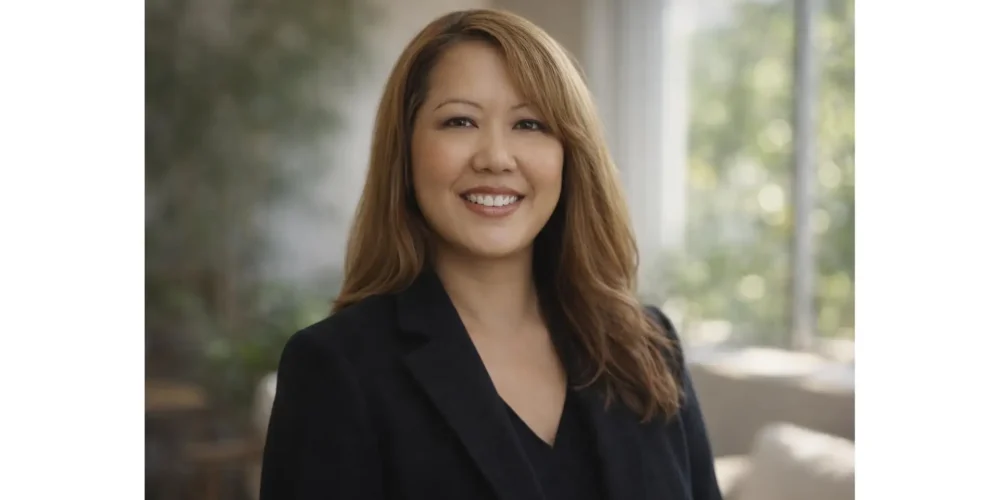
There is a particular kind of exhaustion that shows up in leaders who are doing everything right and still feel like they are being watched, questioned, or quietly written off. Dr. Jacqueline Ashley, PCC has built her entire coaching practice around that exact moment. Not the leader who is failing, but the leader who is succeeding on paper while wondering why it still feels so hard to be believed.
“The skills that got you here won’t carry you forward,” is how she puts it on her website. It is a simple line, but it captures the core of her work with global-majority leaders and accomplices to inclusive leadership who are building confidence, sustainable ways of leading, and real influence, with higher stakes, more visibility, and more complexity than they have ever faced before.
Based in Los Angeles and working with clients around the world, Dr. Ashley is an executive leadership coach whose path to the profession runs through film, healthcare, a doctorate in social change and innovation, published work in Forbes, and advisory work that helped shape public mental health policy for the Congressional Mental Health Caucus. That range shows up in how she coaches. She is not handing clients a framework and asking them to fit into it. She is asking who told them what leadership was supposed to look like in the first place, and whether that story still serves them.
A Career Built On Understanding Both The Story And The System
Dr. Ashley did not start out planning to become a coach. She started at the USC School of Cinematic Arts, studying film and television production. It sounds like an unlikely runway into executive coaching until she explains it herself.
“At the center of my work is a simple belief: the stories we inherit shape how we lead, until we learn to question them,” she writes in her own account of how she got here. Film taught her how narratives get constructed and how deeply they shape what people believe is possible for themselves. That lesson became the spine of everything she has done since.
As a Thai-American woman married to a Black multiracial man, she also kept noticing a second story running underneath the first: the one systems tell about who gets to lead and whose potential actually gets recognized. So she went into social work, earning her way into a career that gave her, in her words, “the lens to understand structure, pattern, and impact.” An internship during her MSW program introduced her to coaching, and she knew right away it belonged in her future. But first, post-MSW, she chose clinical training as a psychotherapist to deepen that lens further, teaching her to see the patterns clients could not break on their own and the self-doubt that gets reinforced by environments never built to support them in the first place. She later returned to USC to complete her Doctor of Social Work in Social Change and Innovation.
That combination is rare, and it is why she describes her professional identity the way she does. In an interview with Humans of Fuzia, she said plainly, “I’m still a social worker. Everything that I do revolves around that lens of social work.”
Before she built her own practice, that lens showed up in the real world of healthcare. At Riverside University Health System, she was part of an interdisciplinary team as a behavioral health consultant, working alongside physicians, nurses, and staff. Together, they helped expand integrated behavioral health across all eleven of the county’s Community Health Centers, reshaping how primary care teams supported some of the most underserved patients in the system. Her influence has since extended well beyond the clinic and the boardroom. She has served as a subject matter specialist for the U.S. Government Accountability Office on federal workforce practices for diversity, equity, inclusion, and accessibility, served as an adviser for the 31st District Mental Health Consortium, and was a member of Forbes Coaches Council for more than five years, writing on emotional intelligence with particular attention to women of color advancing in leadership.
The Philosophy Behind Her Coaching
Ask Dr. Ashley how she works and she will tell you what she does not do first. “I don’t start with frameworks,” she explains on her directory profile. “I start with you, your patterns, your reactions, and the stories you’ve internalized about what leadership is supposed to look like.”
From there, she works from a framework grounded in emotional intelligence, layering in two supporting practices most coaches keep separate: Red Team Thinking (a method built by military and intelligence agencies to stress-test decisions and expose blind spots before circumstances force the issue), and CliftonStrengths, which maps a person’s natural talents. She built this into what she calls her DESIGN Method, a framework organized around six principles: disrupting the assumptions a leader runs on autopilot, expanding what feels possible, stress-testing strategy so it survives contact with reality, implementing new patterns with real intention rather than good intentions alone, generating the kind of psychological safety that lets teams challenge ideas without fear, and building the influence to make change outlast any one leader’s tenure.
Her reasoning for pairing these supporting practices with emotional intelligence is straightforward. “Emotional intelligence without strategic rigor leaves you reactive,” she writes. “Strategic thinking without emotional awareness misses the human dynamics driving every decision. Strengths without critical self-examination become autopilot.” Put together, they give a leader something more durable than any one piece alone.
Where The Method Meets Real People
Dr. Ashley’s coaching philosophy is best understood through the leaders she has worked with. One client, reflecting on her time in the program, put it this way: “I went from crippling imposter syndrome to genuine confidence as a leader. I learned that self-compassion isn’t weakness. It’s a leadership skill, especially when navigating spaces where I’m often the youngest or only person who looks like me in the room.”
Another described what changed after working with Dr. Ashley on how she showed up at work, not just what she did. “Dr. Ashley didn’t just refine my leadership tactics,” the client said. “She took time to understand who I am holistically: my values, strengths, and the experiences that shaped how I show up. I now lead with more intention and authenticity.”
Dr. Ashley often illustrates the stakes of this work with a story closer to home. She has spoken about her Thai immigrant father, who could switch easily to an American accent but chose, deliberately, not to. “Because my Thai accent gives me character,” he told her. That single decision has become a touchstone in how she coaches leaders who have been told, directly or indirectly, that something about who they are, an accent, a background, a way of showing up, is the thing holding them back. As she said in that same Humans of Fuzia interview, “The accent is not the problem. You’re not the problem.” The trait a leader has spent years minimizing, in her view, is often the very thing that makes their leadership distinct.
She has also shared how quickly this work can move when it targets the right pattern. In an episode of business strategist Sara Gilbert’s podcast, “How To Lead A Big Mission,” Dr. Ashley described a client whose promotion had stalled, and how five months of focused work on self-compassion, not strategy or skill-building, was what finally moved it forward. Self-care, she argued in that conversation, is not a reward for burnout. It is leadership infrastructure.
How Dr. Ashley Can Work With You
Dr. Ashley runs her practice through her company, WorkLifeHealth.design, and offers a few distinct paths depending on what a leader needs.
Her flagship offering is Individual Professional Development, a monthly coaching partnership for leaders who know the title alone will not get them where they want to go. This is where clients build stronger influence, steadier communication under pressure, and a way of leading that actually feels like them rather than a performance of what leadership is supposed to look like.
For leaders who need something faster, she offers 90-Minute Leadership Intensives. No long runway, no lengthy onboarding. A client walks in with one decision, one conversation, or one leadership moment they need to get right, and walks out with an actual plan. It is coaching sized for the reality that not every problem needs a quarter to solve.
She also partners with organizations directly through Corporate Coaching, building inclusive leadership development for companies that want to close the gap between the culture they say they have and the one employees actually experience.
Across all three, the specialties are consistent: confidence, sustainable leadership, attunement, and influence.
A Coach Working With Leaders Everywhere
Dr. Ashley coaches across industries, including healthcare, technology, entertainment, oil and gas, government, and nonprofit, without needing to be the technical expert in any of them. “I don’t need to know how to do their job,” she has said. “That’s what they do. They tell me, and I help them think it through.” Her clients tend to be leaders from the global majority, along with accomplices to inclusive leadership, carrying real weight in high-pressure roles and looking for a way to build influence without losing themselves in the process.
Her personal motto sums up the thread running through all of it: show up with compassion every day. Or, as she asked in her own writing on the DESIGN Method, “What would change if you led with full clarity, full strength, and full intention?”
How To Get In Touch With Dr. Jacqueline Ashley, PCC
Prospective clients interested in learning more or starting a conversation with Dr. Ashley can reach her through the following channels.
- Leadership Coach Directory Profile: Dr. Jacqueline Ashley, PCC
- Website: worklifehealth.design
- Request a Coaching Fit Review: pages.worklifehealth.design/coachingfit
- The Leadership Throughline: pages.worklifehealth.design
- LinkedIn: linkedin.com/in/drjacquelineashley
- Instagram: @dr.jsashley
- Email: coaching@worklifehealth.design