
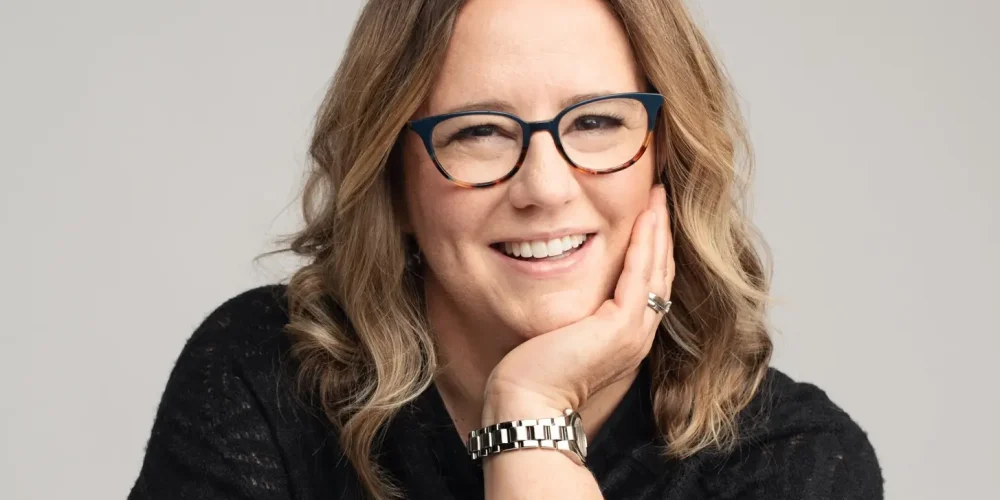
Kim Harr spent nearly three decades solving problems that showed up on spreadsheets until she discovered the harder, more interesting problems were the ones that showed up in people. That shift, from fixing processes to understanding humans, is the thread that runs through everything she does now as the founder of Starr Leadership Group in Portland, Oregon.
Her professional bio on the Leadership Coach Directory puts it plainly. She works with leaders and organizations on the challenges everyone else has given up on. As she describes her own niche, “I specialize in the problems others think can’t be solved.” For senior professionals who have already tried the obvious fixes and are still stuck, that’s not a marketing line. It’s an invitation. leadershipcoachdirectory
From the Fab Floor to the Coaching Chair
Harr holds a bachelor’s and master’s degree in industrial engineering from the University of Michigan, and she built her early career the way engineers do: methodically. She spent 23 years at Intel and another three at Lam Research, moving across research and development, high volume manufacturing, supply chain, and HR in ways few of her peers attempted, according to her bio on SEMI’s Pacific Northwest Forum page. Along the way she earned Intel’s highest individual honor, the Intel Achievement Award, became a certified Lean Six Sigma Master Black Belt, and won the Society of Women Engineers’ Emerging Leader Award, according to her profile with Extraordinary Teams.
She talks about the pivot into people work with real candor. On The Wantrepreneur to Entrepreneur Podcast, she explained how engineers get trained to study systems, not people, and then land in jobs where the people problems turn out to matter more than the technical ones. She had been dreaming about starting her own firm for close to fifteen years before she actually did it, building a spreadsheet, interviewing coaches and consultants, and writing a business plan the way any good engineer would. What finally pushed her out the door wasn’t a grand epiphany. It was exhaustion. She was working too many hours and, in her own words, surviving rather than thriving. So she made a deal with her partner: three years to hit her business goals, or back to the job market she’d go.
That leap became Starr Leadership Group, named as a blend of her married and maiden names. One year in, she wrote candidly about what she’d learned running a business after almost three decades in corporate structure. Referrals, she found, compound. “Good work yields more work,” she wrote in a reflection on her first year in business, crediting the network she built over nearly 30 years in corporate America for the client base that followed her out the door. starrleadership
Her Work
Harr, an ICF Associate Certified Coach, runs two parallel tracks of work. For individuals, she offers one-on-one coaching engagements, typically three to six months with sessions every few weeks, plus a signature six-session program called Forward with Intention that walks clients through who they are, what their non-negotiables look like, and what their next concrete steps should be. Single sessions are also available for people who want focused, high-impact conversations rather than an ongoing engagement, detailed on her services page.
For organizations, she brings a network of collaborators to design workshops, ongoing leadership coaching, and a six-month cohort program called Foundations of Effective Leadership. She describes her consulting model with a memorable comparison: her firm works like a caterer, not a restaurant, building a custom menu around each client’s actual problems rather than serving up the same fixed offering to everyone. Her specialty areas span difficult conversations, rebuilding team trust, decision making, resilience, and developing people managers, and she’s especially known for working with what she affectionately calls her “nerds”: engineers, doctors, accountants, and lawyers who think in systems and sometimes need help translating that clarity into how they lead people. One client summed up the tone of her workshops this way: “That was the least touchy-feely thing I’ve ever done!” For an audience of analytical, results-driven professionals, that’s high praise. starrleadership
She also speaks and facilitates. Her speaking page promises no buzzwords and no ideas that evaporate the moment the talk ends, just tools an audience can put to use immediately, whether she’s addressing engineers, doctors, or leaders navigating a transition.
The Philosophy Underneath it All
Harr’s coaching identity centers on a simple image: most problems are icebergs. The visible piece, the missing skill or the unmet deadline, is rarely the real issue. On her homepage, she writes that most of her clients arrive stuck in a way that isn’t obvious, with the real cause tangled up in identity, mindset, and old stories they’ve been telling themselves for years. Her job is to help people find what’s beneath the waterline. As she puts it, “I help people get below the surface, gently, curiously, and with zero fluff.” starrleadership
That combination, warmth paired with directness, shows up everywhere in how she describes her own approach. She rejects one-size-fits-all frameworks outright. On her Meet Kim page, she states it in six words: “I don’t believe in cookie-cutter solutions.” Instead, she describes her method as doing the messy, meaningful work alongside a client until the actual source of the problem surfaces. Clients have told her that working with her feels like finally figuring out why they’ve had a headache for years. Once you know the cause, you stop reaching for another round of aspirin. starrleadership
Her values, spelled out on her site, spell an acronym: curiosity, empathy, transparency, efficiency, and encouragement. CARING, as she frames it. It’s a fitting summary of a coach who spent decades in engineering culture and came out the other side determined to bring more heart into it, not less.
The Stories and the Frameworks
Harr’s coaching draws heavily on lessons she picked up teaching Lean Six Sigma classes at Intel, where her students ranged from HR generalists to PhD chip designers scattered across Asia, South America, and Europe. To make dense technical material land across that range of backgrounds, she leaned on analogies pulled from sports, cooking, and home life, something colleagues eventually told her was a genuine skill of hers. She’s carried that habit straight into her coaching practice, where she often reaches for sports team analogies (she’s a particular fan of comparing team culture to a locker room and cites Ted Lasso as a real-world example of a coach shaping what’s allowed and what isn’t).
One of her core frameworks, which she calls shared commitment, comes up constantly in her coaching conversations. The idea is that most conflict isn’t really about the surface disagreement. It’s about mismatched commitments sitting underneath the visible action. When she sees tension on a team, her first move is to look for where two people might actually agree at a deeper level, then build up from there.
She also talks about what she calls putting on leadership glasses, a mental habit of noticing which conversations aren’t happening yet but need to. One of her favorite coaching questions, deceptively simple, is asking a team what problem they’re actually trying to solve. She’s found that people who think they already agree on the answer often discover, once asked directly, that they don’t.
Her most personal story, and the one that shaped her coaching practice the most, is about burnout. She left Intel after 26 years partly because she felt her marriage and her presence with her family were suffering under the weight of the job. She moved to a smaller tech company, only to notice within six months that the same patterns had followed her there. She then started her own business, thinking corporate structure itself was the problem. Within six months of going independent, the same behaviors showed up again. The realization that followed became a cornerstone of how she now coaches clients through burnout. “The common denominator was me,” she said on The Wantrepreneur to Entrepreneur Podcast, describing the moment she stopped blaming her employers and started examining her own habits instead. It’s a story she now uses with clients who assume changing their job title or their company will fix what’s actually an internal pattern. Thewantrepreneurshow
Why Clients Keep Coming Back
The testimonials on her site read less like polite endorsements and more like genuine relief. A former colleague from her Intel years credits her with balancing business needs against employee data during a difficult organizational change. A fractional COO says one conversation with her is enough to reveal her knack for guiding people to the actual root of what they’re trying to solve. A former client says she helped them move from circular, anxious thinking to two or three clear, confident directions forward, and even planted the idea of buying a business in their head along the way. Across the board, the word that shows up again and again is clarity, the sense of finally seeing a problem clearly enough to act on it.
How to Work with Kim Harr
Harr works with clients both online and in person out of Portland, Oregon, and offers a free chemistry call for anyone weighing whether she’s the right fit before committing to a full engagement.
- Full Profile on Leadership Coach Directory
- Website: starrleadership.com
- Email: kimharr@starrleadership.com
- LinkedIn: Kimberly S. Harr
- Schedule a consultation: Calendly
- Schedule a chemistry call: Calendly
For leaders who suspect the real issue isn’t the one showing up in their KPIs, that’s a conversation worth having.